Thursday, November 27, 2014

Knowmedge Internal Medicine QBank 2014 Thanksgiving Sale

The Knowmedge Internal Medicine Question Bank sale is now up!

We are so thankful for so much this year! 2014 was a year where we made significant updates to the Knowmedge learning platform. We started the year with just the Internal Medicine QBankon the platform. In July, we integrated mnemonics into the IM QBank and also launched themedical mnemonics platform with over 1,500 mnemonics. We have been enhancing the questions on the IM QBank to make them even more challenging for the boards. We also launched the Knowmedge refer-a-friend program. And the biggest is yet to come… we’ll be launching out Internal Medicine Flashcards platform soon (check back for details!).

None of this could have been done without your support. Thank you being a part of the Knowmedge community – whether it’s on our site or on any of our social media pages – Twitter,Facebook, Google+, or Pinterest. We have genuinely appreciated every interaction and every conversation.

We love what we do here at Knowmedge  and you make it possible for us…. So from the bottom of our hearts…Thank you! And from the Knowmedge family to yours…. Happy Thanksgiving!

Now through Tuesday, December 2nd – take $50 off the cost of any IM QBank subscription (new or renewal).

Knowmedge IM QBank Thanksgiving Sale

Thursday, November 13, 2014

5 General Internal Medicine concepts to Master for ABIM & USMLE


The American College of Physicians (ACP) hosted its 2014 Internal Medicine annual meeting in Orlando, Florida this past April. Dr Geraldine E. Menard, an associate professor of the Department of Medicine at Tulane University School of Medicine, presented high-yield General Internal Medicine concepts as part of a review of the ABIM syllabus. Those key take-home teaching points have been adapted and summarized here, with Knowmedge visuals. As we continue with #GeneralInternalMedicine Week, we present five topics: Biostatistics, Smoking Cessation, Alcohol Screening, Strep Throat, and Sinusitis. 

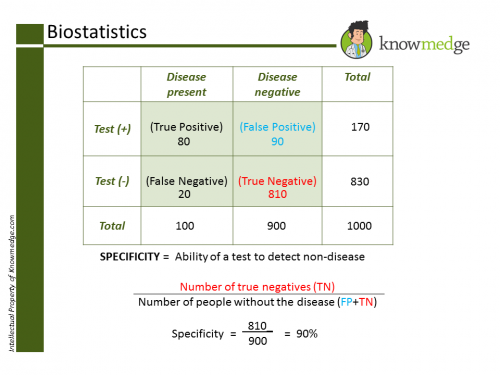
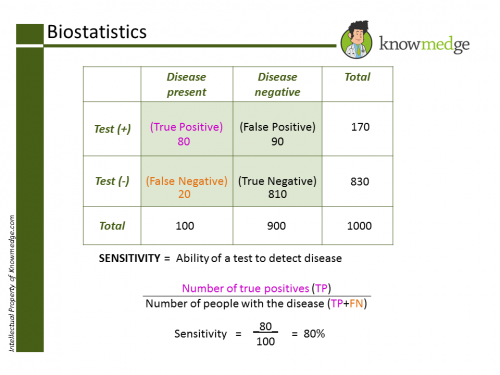
BiostatisticsBiostatistics SpecificityBiostatistics Sensitivity
  • A test that has high Specificity is used to “rule in” a condition when the result is positive; whereas a high Sensitivity is used to “rule out” a condition when the result is negative test. A favorite mnemonic your friends at Knowmedge use is “SPin” and “SNout”.
  • A test provides the most useful information when the condition has an intermediate disease prevalence (30-70%) or intermediate pre-test probability.
  • Data can be skewed by being presented as an impressively large risk ratio. If the absolute risk reduction (ARR) is small, the intervention isn’t particularly effective.
  • The number needed to treat (NNT) is simply the inverse of the absolute risk reduction (ARR) as in NNT = 1/ARR. NNT represents the number of people who are required to undergo treatment before one person benefits.
  • The similar-sounding number needed to harm (NNH) is the number of people who are required to undergo treatment before one person is harmed by the treatment.
  • Relative risk confidence level should not contain the value 1. If it does, that means that the treatment may or may not be effective.


Smoking Cessation Internal Medicine Smoking Cessation
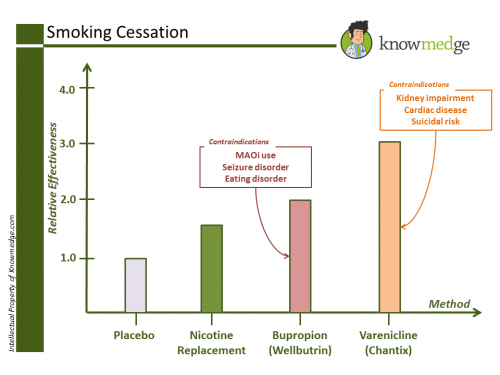
  • Varenicline has a 3.5 fold increase in achieving smoking cessation versus placebo alone and is nearly twice as effective as Buproprion. It should be avoided in patients who have suicidal ideation or at an increased risk of cardiovascular events.
  • Buproprion is a reasonable smoking cessation option. It is twice as effective as placebo in achieving smoking cessation. However, it is contraindicated in patients with seizure disorder or who at risk of developing seizure disorder. Also, patients with eating disorder (anorexia or bulimia) should absolutely avoid it.
  • SSRIs like sertraline and SNRIs like duloxetine are not indicated for smoking cessation.


    • Alcohol Screening 

      Alcoholism Screening 

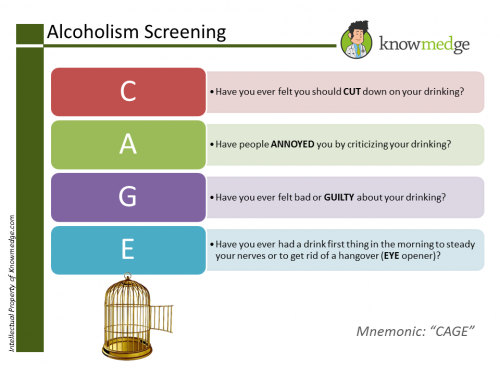
      CAGE screening: A score of 2 or more is considered positive and warrants further counseling regarding the dangers of excessive alcohol use. 

      Strep Throat 

      Strep Throat Centor Criteria Internal Medicine 

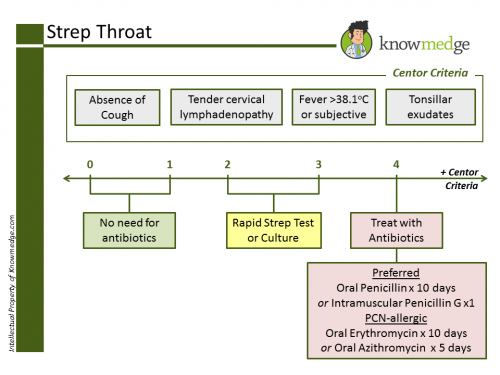
      One of the most commonly encountered complaints in General Internal Medicine, sore throat should be evaluated using the Centor criteria when there is concern for Strep throat.
      • Fever (can be subjective or measured >38.1C)
      • No cough
      • Tender anterior cervical lymphadenopathy
      • Tonsillar exudates (“white spots or discharge on the tonsils”)
      Risk stratify to determine the best next step:

      Score 0-1
      • Low risk: provide supportive care without further testing
      Score 2-3
      • Intermediate risk: Rapid strep test or throat culture
      Score 4
      • High risk: Treat without further testing

      Treatment: Preferred treatment is oral Penicillin for 10 days or single intramuscular shot. Only give the commonly prescribed azithromycin (or erythromycin) on the boards for strep throat if the patient is allergic to penicillin. 

      Acute Sinusitis Sinusitis Internal Medicine 
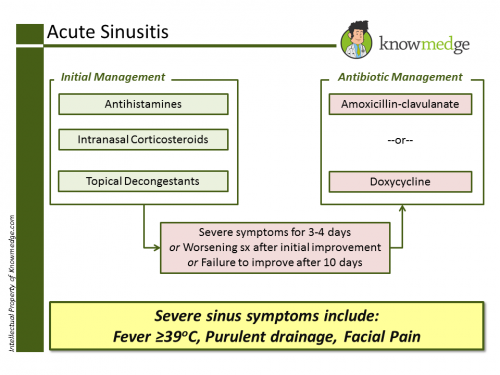
      Less is more in the treatment of sinus symptoms. Look for the buzz words–purulent nasal discharge, unilateral maxillary pain, or worsening symptoms after initially getting better. If none of these are present, supportive care is the best way to manage. No antibiotics. No sinus scans. 

      So, there you have it: 5 high-yield General Internal Medicine topics to master in your preparation of the ABIM board exam. Feel free to drop us a note below if you have any questions or additional pointers.


    http://knowmedge.com/blog/5-general-internal-medicine-concepts-abim-usmle/

    Tuesday, October 21, 2014

    Alcohol Poisoning: What you Need to Know for the ABIM and USMLE exams

    If most of your clinic duties are in primary care, you may only rarely encounter alcohol poisoning. However, this topic is a favorite of the boards in the Nephrology section and one that does certainly arise in emergency departments and on the inpatient wards. For the USMLE and ABIM examinations, it is important to know the specifics of alcohol poisoning, including how to differentiate among Ethanol, Methanol, Isopropyl alcohol, and Ethylene glycol. In fact, in a patient suspected of having consumed too much alcohol, these will be the answer choices rather than simply “alcohol poisoning.” So how do we arrive at the correct diagnosis?

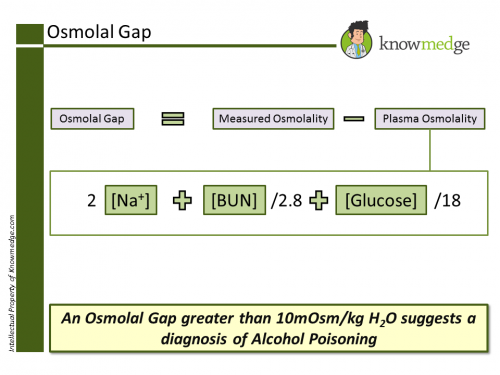
    First of all, you won’t be able to consider alcohol poisoning without first calculating an osmolal gap, the difference between the measured (seen on labs) and the calculated osmolality. The former is seen on the lab value list provided in the clinical vignette; the latter is determined by the following equation: Plasma Osmolality = 2 x serum [Na+] + [BUN]/2.8 + [Glucose]/18

    Osmolal Gap Internal Medicine 1

    A normal osmolal gap is 10mosm/kg H2O. A larger than 10mosm/kg H2O value suggests that the unmeasured osmoles is attributable to an alcohol.

    Now, how do we differentiate the different types of alcohol? Using a few simple clinical clues…

    Differentiating Alcohol Poisoning Types Internal Medicine1
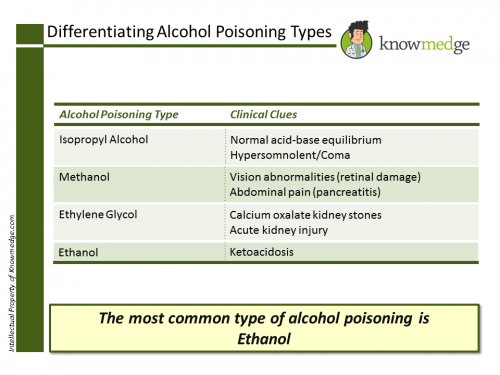
    • Of the 4 causes, only isopropyl alcohol does not have an anion gap metabolic acidosis. In fact, the patient will likely feature a normal acid-base status despite being so severely ill that they are in a coma or at least hypersomnolent.
    • Vision abnormalities or abdominal pain suggest methanol due to this alcohol’s effects on the retina and the pancreas.
    • While the eyes and pancreas are damaged by methanol, the kidneys are the main organ affected by ethylene glycol due to its breakdown to oxalic acid that can cause nephrolithiasis, especially calcium oxalate stones.
    • Ketoacidosis is primarily seen in ethanol poisoning (the most common type of alcoholic poisoning).


    The ABIM and USMLE exams are known for testing both the diagnosis and treatment of various conditions. Alcohol poisoning is no different. You will either be asked what the most likely diagnosis is in a patient with an overdose of some type or what the best next step is in his or her management. 

    Differentiating Alcohol Poisoning Types Internal Medicine2 

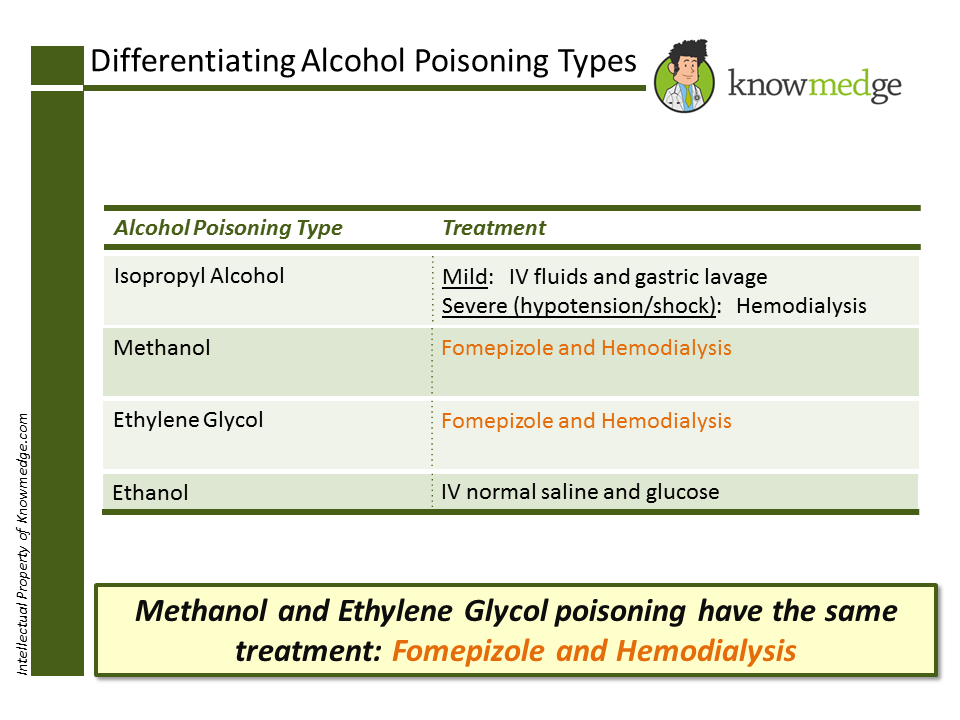
    Isopropyl alcohol treatment is dependent on the intensity.
    • -Mild intensity: IV fluids and gastric lavage
    • -Severe intensity (featuring shock and low blood pressure): Hemodialysis


    Methanol and Ethylene glycol have similar treatment (isn’t that nice?):
    • Fomepizole and Hemodialysis


    Ethanol poisoning has the most basic management: IV fluids including glucose. 

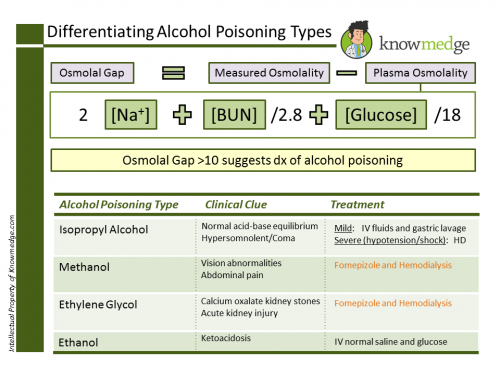
    Now, that you’ve reviewed alcohol poisoning for the ABIM and USMLE boards, let’s give you all the info in one simple Knowmedge visual. 

    Differentiating Alcohol Poisoning Types Internal Medicine3 

    Thanks in advance for sharing your thoughts below if you have additional tips for the other users in the Knowmedge community.


    This was originally posted at http://knowmedge.com/blog/alcohol-poisoning-what-you-need-to-know-for-the-abim-and-usmle-exams/

      Tuesday, October 14, 2014

      The 5 Things You Need to Know about the New Cholesterol Guidelines for the ABIM & USMLE exams

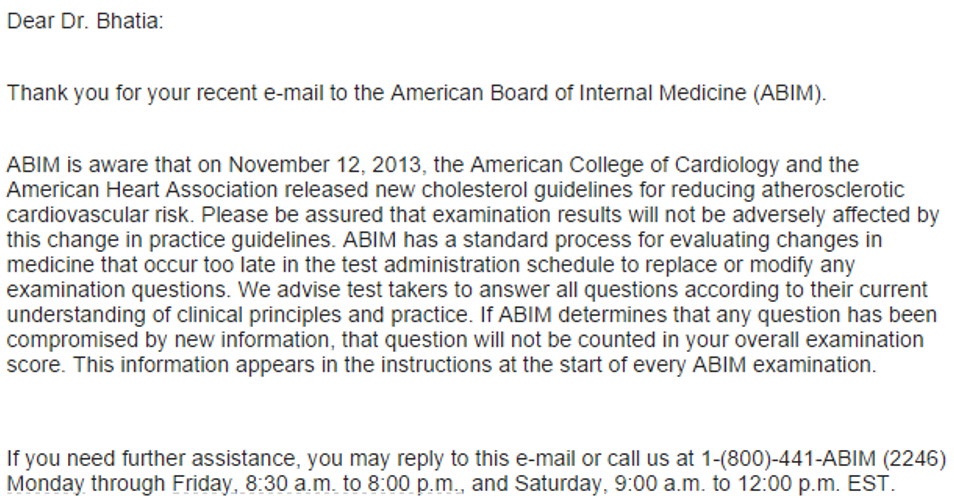
      With all the recent revisions to hypertension goals, breast cancer screening, prostate serum antigen (PSA) testing, etc., you’d think medical societies were deliberately trying to confuse medical students and internal medicine residents preparing for the USMLE and ABIM examinations. Fortunately, there isn’t any evidence of any diabolical agenda. At the same time though, because the folks at the ABIM aren’t particularly specific about when to start adopting guidelines (see image below), it’s the responsibility of each exam-taker to be aware of what changes have occurred since we were formally taught a particularly topic in a med school lecture, morning report, or noon conference.

      IM-Boards-Cholesterol-Guidelines

      Previously, I wrote about the major take-home points from the new JNC8 hypertension guidelines. Around that time, in November 2013, the American College of Cardiology (ACC) and the American Heart Association (AHA) along with the National Heart, Lung, and Blood Institute replaced the previous Adult Treatment Panel (ATP) guidelines on cholesterol management as well. This new set of cholesterol guidelines made headlines worldwide and created a mound ofcontroversy. The debate has died down and major healthcare organizations like Kaiser Permanente have incorporated them into their own guidelines. Thus, we can now establish some key summary points from the guidelines.


      1. Discontinue those LDL standing orders 
      One of the most profound changes was the removal of the target LDL levels in patients with cardiovascular disease or its equivalents. These individuals are no longer treated to a goal of 100mg/dL, ideally 70mg/dL. Indeed, no randomized clinical trials has proven benefit of treating to target LDL levels. One benefit of this update is that you won’t have to order as many labs on your patients–no more q3 month lipid panels. For patients, this means a reduction in needle sticks and laboratory co-pays while getting the benefit of reduced adverse cardiovascular events. 

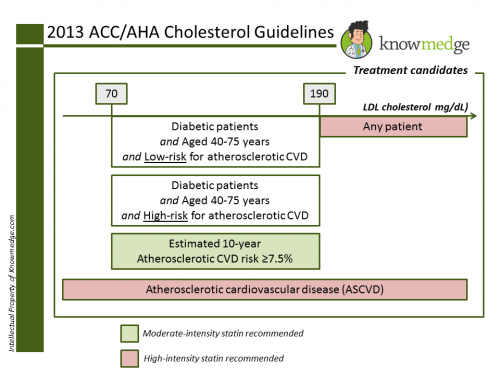
      2. Four groups of patients should be treated with statins 
      Earlier, statin use was recommended only for those patients with a high 10-year cardiovascular risk of 20%. However, now there are many more patients who will be eligible for statin medication, representing perhaps the thorniest issue with the new guidelines. The four groups of patients who should be prescribed statins are: 
      - Clinical atherosclerotic cardiovascular disease
      - LDL cholesterol greater than or equal to 190mg/dL
      - Diabetics aged 40 to 75 years
      - LDL-cholesterol levels between 70 and 189mg/dL and a 10-year risk of atherosclerotic cardiovascular disease greater than or equal to 7.5%
      2013 ACC Hyperlipidemia Internal Medicine

      3. If it’s not a statin, don’t prescribe it for hyperlipidemia
      Others may affect the lab values, but statins (HMG-CoA reductase inhibitors) are the only lipid-lowering medications that have been shown to reduce cardiovascular events and mortality in both primary and secondary prevention trials. Non-statin therapies don’t offer any benefit. We could see this coming when ezetemide (Zetia) was found to be ineffective in lowering heart attack or stroke risk despite lowering LDL levels by 15 to 30 percent. Enthusiasm for non-statins was further dampened with the 2011 AIM-HIGH trial. This study of 3414 patients with stable coronary artery disease and low HDL levels was prematurely terminated when the adverse event rate (myocardial infarction, ischemic stroke, death from coronary artery disease, acute coronary syndrome hospitalization and revascularization) was 16.4% in the niacin group and 16.2% in the placebo group.

      4. Out with Framingham, In with Pooled Cohort Risk Assessment 
      A town in Massachusetts, Framingham is best remembered for the famous study that led to the establishment of cardiac risk factors. The new guidelines replaces this risk calculator with the new Pooled Cohort Risk Assessment, which incorporates ethnicity and gender. The tool calculates risk of fatal and nonfatal stroke in addition to coronary heart disease. The patient’s calculated risk is important because it can determine if the patient receives a low-dose or a high-dose statin. 

      5. Dose matters 
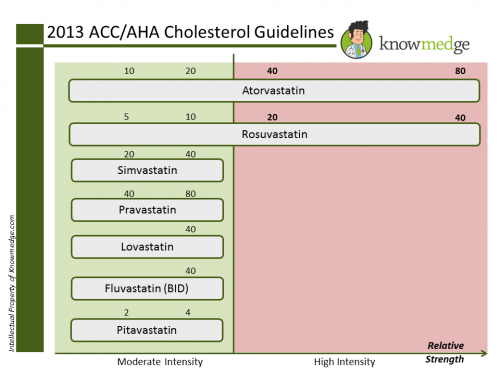
      Earlier guidelines didn’t emphasize the strength of the statin. Now we differentiate the medications into moderate- and high-intensity groups.2013 ACC Hyperlipidemia Internal Medicine2


      High-intensity statins are simply:
      - Rosuvastatin 20-40mg daily
      - Atorvastatin 40-80mg daily

      They are recommended for the following:
      - Any patient–regardless of LDL level–with atherosclerotic cardiovascular disease (ASCVD)
      - Any patient with an LDL cholesterol greater than 190mg/dL
      - Diabetic patient between 40-75 years with 10-year risk of ASCVD greater than or equal to 7.5%

      Moderate-intensity statins include the following:
      - Atorvastatin 10-20mg daily
      - Rosuvastatin 5-10mg daily
    • - Simvastatin 20-40mg daily
    • - Pravastatin 40-80mg daily
    • - Lovastatin 40mg daily
    • - Fluvastatin XL 80mg daily
    • - Fluvastatin 40mg twice daily
    • - Pitavastatin 2-4mg daily

    • They are used for the remaining patient groups:
      - Diabetic patient between 40-75 years with 10-year risk of ASCVD less than 7.5%
      - Patients with 10-year risk of ASCVD greater than 7.5%

      So there you have it. In 5 easy-to-follow bullet points, you have the knowledge you need to answer any question covering the new Cholesterol Guidelines on the ABIM or USMLE exams.

        Be a Knowmedge Medical Education Enthusiast and Earn Money!

        Are you a medical education enthusiast? Are you passionate about improving medical education?
        If so, we’d like to invite you to become an advocate for Knowmedge and earn money while doing it!

        Why?
        You recognize that learning comes from high-yield videos, images, mnemonics, and questions. Together we can revolutionize the way students learn!

        What are we talking about?
        It’s pretty simple - We’re looking to spread Knowmedge and we’re looking for help. And we’re willing to pay for it! So we are introducing a Refer-a-Friend program!

        That sounds cool! How does it work?
        We have 2 products currently on the Knowmedge learning platform – the Internal Medicine Question Bank and the Medical Mnemonics. You’ll get a bonus each time a friend signs up for a product using your Referral ID!
        • Internal Medicine Question Bank - $20 referral bonus and your friend gets 1 month FREE!
        • Mnemonics - $5 referral bonus!


        Let’s do it! How do I get set up?
        1. Set up or log into your account at www.knowmedge.com
        2. Click on the “Refer-a-Friend” button to see your personal Refer-A-Friend page
        3. Share your Referral ID with your friends through email or social media. Feel free to share it on your personal blog or through message boards. 


        We’ll do the rest! We’ll let you know as soon as someone signs up for a paid account using your Referral ID and when your account gets credited the money!

        Happy Studying... Let's Spread some Knowmedge!


        Friday, October 10, 2014

        ABIM Internal Medicine Board Exam Results

        The 2014 ABIM Internal Medicine Board Exam results are out! For those that passed, we are so happy for each of you! As with each of us who has taken the exam – you don’t get here without a lot of effort and sacrifice! So a hearty congratulations to each of you! Or as we like to hashtag on twitter… #HeckYeah!
        The ABIM Exam results are out though the total percent of exam takers that passed won’t be released until a later date. If the results are similar to previous ABIM results, we can expect a total pass rate of somewhere in the mid 80% range for first-time takers.
        To those who did not pass, you should know that it doesn’t mean you aren’t a great doctor. It doesn’t mean you don’t care about your patients or that your patients don’t love you. It doesn’t mean that you are any less qualified to be a doctor. It means one thing and one thing only… that you did not pass the exam.
        And, yet, as I’m sure all of you are aware – it’s important to pass the exam. We know there’s a lot of debate out there on this topic and we recognize there is a lot of negative sentiment towards the ABIM. Until the rules change, though, we all have to play by them. And that means you have to get back up and get it right! The good news is… you can pass this exam – We promise you!
        We want to share with you an email we received from a subscriber.
        Yes, you read that correctly… 15 years! Now that’s an incredible story! We assure you no one wants to have a 15 year struggle. The subscriber, who goes by R.A., was the first person to send us a message yesterday. And it stopped us in our tracks. Behind that message there is an incredible 15 year story of perseverance.  If R.A. kept going for 15 years…then you can as well. You can regroup and pass the exam next year!
        There is no perfect solution to passing this exam. Each of us learns differently. Over the past year, we’ve discussed some of the great sources such as the MKSAP books or Board Basics. We’ve also covered the large number of Internal Medicine Board Review Live Courses. We have also reviewed how to study for and pass the ABIM exam.
        Each of these is helpful. And as you get back in your exam prep mode – We hope you’ll find them to be a helpful review. However, the best advice We can give you is to take a mental break. Even if you feel like you could start right now… resist the temptation to actually begin studying. We wouldn’t discourage you from setting up a study plan…in fact you should. Commit to when you will start studying, think about what resources you’ll want to use. Even if you want to get everything ordered, that’s all right. Once that’s done – just step back, clear your mind and start back up when you’re ready. It may take a few weeks, a month, or even until early next year. That’s okay.
        One final note – We want you to know that we want to be there to help you pass next year. It really does mean a lot to us. If you did not pass this year – just send us a note with a screenshot of your result. Once we receive your email, we’ll send you a coupon to get the IM QBank for an entire year for $199. That’s $100 off the regular price.
        We hear from people that pass, as well as those that haven’t passed. As good as it feels to hear from people that pass, it’s the “didn’t pass” emails that keep us up at night. We want to be there with you… we want to hear from you if you didn’t pass because we really want to hear from you next year when you do! And so together we can #HeckYeah!